AI-Mediated Consumer Choice

The Invisible Buyer

Being found is not the same as being chosen.

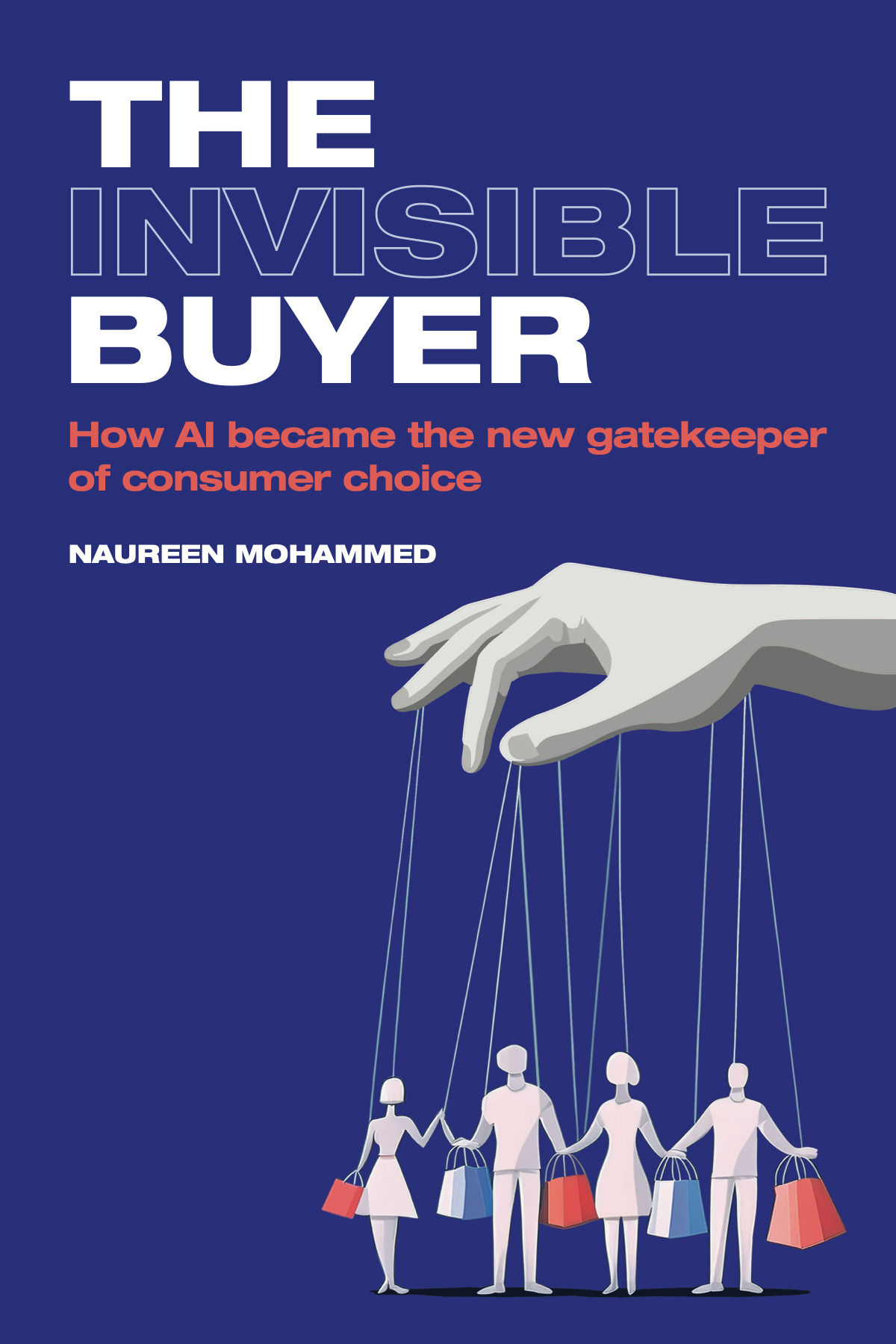
Marketing always had two buyers. The trade buyer who decides what gets listed, and the shopper who decides what gets bought. Now there is a third, and it is a machine: the AI that decides what gets recommended. I study how it chooses, and I help UK CPG brands win it.

The Invisible Buyer, a book by Naureen Mohammed
Forthcoming book

The Invisible Buyer

How AI became the new gatekeeper of consumer choice, and how brands get chosen.

A working brief for winning the machine that now decides what gets recommended: a new framework, and original research across nine UK categories. The marketing canon carried into the AI era, not replaced.

In the research behind it, Pantene, one of the world’s biggest haircare brands, was shortlisted by AI assistants 34 times across 360 answers, and named the best answer zero times.

By Naureen Mohammed. Thirty years building brands at J&J, Unilever and Beiersdorf, and a decade inside the platforms doing the disrupting at Meta and Pinterest.

The premise

There is a new buyer, and it is a machine

Get past the first two and you still have to win the third.

01

The trade buyer

Decides what gets listed

The retailer or category manager who decides whether you reach the shelf at all.

02

The shopper

Decides what gets bought

The human who stands in the aisle, or on the product page, and picks.

03

The Invisible Buyer

Decides what gets recommended

The AI that shortlists two or three brands when a shopper asks it what to buy. New, a machine, and almost nobody is managing it.

The shift

The shelf went from ten names to three

Google returns ten blue links and lets the shopper choose. An AI returns about three named brands, and often just one. If you are not in those three, you are not in the conversation, and the shopper never learns you existed.

This is not SEO with a new coat of paint. Search earns a place in a list. The Invisible Buyer skips the list. It reads the sources, forms a view, and names the brands it trusts. The work that wins a citation is not the work that won a blue link.

What the machine reads

The way to win the future is the oldest playbook: the 4 Ps

From my AI Choice Audit, written up in Marketing Week: what actually makes an AI name a brand.

Product

Read like a spec sheet

The engine reads your listing for what is in it, what it is for and who it suits. The exact active for the exact problem.

Place

Cited in 42% of answers

The most common reason the machine names a brand is simply that you can buy it in the UK. It wants to know you are purchasable before it will put you forward.

Price

Cited in 31% of answers

The budget pick or the premium one. The AI almost always slots a brand into a tier.

Promotion

65% leaned on earned proof

Not advertising. An expert endorsement, an independent lab test, a certification. The reputation work the machine actually reads.

Source: “The 4Ps are still the route to success in the age of AI”, Marketing Week.

How to measure it

Your Choice Gap, and how to close it

The Choice Gap

The distance between your market share and your recommendation share. The brands that sell the most are often not the brands AI recommends the most. That gap is where tomorrow’s share leaks away, quietly, before it ever shows up in your sales figures.

AI Visibility Score

A single measure of how often, and how favourably, the major AI engines recommend you in your category. Tracked the way you already track share of voice and share of search, so the board can watch it move.

Questions

What marketing leaders are asking

What is the Invisible Buyer?

The Invisible Buyer is the AI that now sits between your brand and your shopper and decides what gets recommended. Marketing always had two buyers: the trade buyer who decides what gets listed, and the shopper who decides what gets bought. Now there is a third. When someone asks ChatGPT, Gemini or Perplexity what to buy, an algorithm shortlists a handful of brands before a person sees anything. That algorithm is the Invisible Buyer.

What is AI-mediated consumer choice?

It is how consumers now discover, compare and choose brands through AI assistants and answer engines rather than through a page of search results or a shop shelf. The decision is increasingly shaped by what the AI recommends, so brands have to earn the recommendation, not just the ranking.

Is this the same as SEO?

No. SEO gets you found. It earns a place in a list of links a person then chooses from. The Invisible Buyer skips the list: it reads the sources, forms a view and names two or three brands. Being found is not the same as being chosen, and the work that wins a citation is not the work that wins a blue link. GEO and AEO help with retrieval, but retrieval is one gate, not the whole decision.

What is the Choice Gap?

The Choice Gap is the distance between your market share and your recommendation share. The brands that sell the most are often not the brands AI recommends the most. If you lead your category on the shelf but the AI names a competitor, that gap is where future share leaks away.

What is an AI Visibility Score?

An AI Visibility Score (AIVS) is a single measure of how often, and how favourably, the major AI engines recommend your brand in your category. It is tracked the way a CMO already tracks share of voice and share of search, so the boardroom can watch it move.

Why should a CPG brand act now?

Because the answer is being written now, and it hardens. AI engines build a memory of your category with each model generation. The first brand to give them a clear, citable reason to recommend it sets the default the others inherit. An open category is a closing window.

Find out whether the AI recommends you

Start with your AI Shelf Assessment, read the research, or talk to the fractional CMO who closes the Choice Gap.

Or read the AI Choice Audit